
Why do you need an orderly start?
Because AI is already used in most businesses, often without rules and with private free accounts. That leads to three problems: customer data ends up in tools without a contract, the quality of results varies, and nobody knows where AI actually saves time. An orderly start turns individual experiments into a benefit for the whole team.
What are the steps of the introduction?
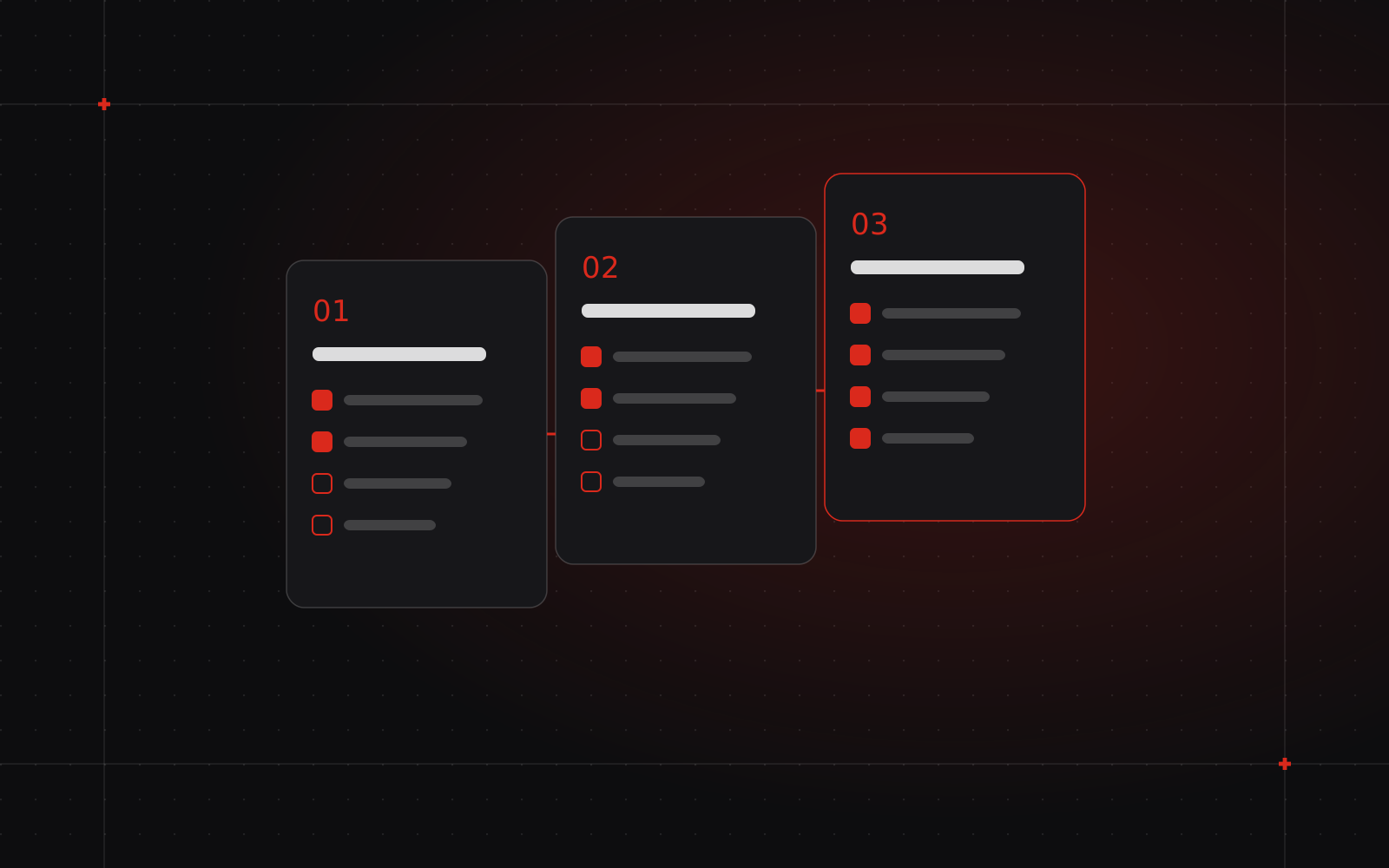
| Phase | Content | Result |
|---|---|---|
| 1. Workshop | Basics, live examples with your own tasks, collecting ideas | List of possible use cases |
| 2. Assessment | Estimate the benefit, effort and data risk of each idea | One or two pilot projects |
| 3. Policy | Permitted tools, handling of data, responsibilities | AI policy of one or two pages |
| 4. Pilot | Test one use case in daily work, for example draft quotes | Measured time savings and experience |
| 5. Expansion | Training, further use cases, automation of processes | AI as a fixed part of the work |
What happens in an AI workshop?
The team learns, using its own tasks, what AI can do and where it makes mistakes. Typical content:
- How language models work and why they sometimes invent facts
- Live exercises with real tasks: emails, quote texts, minutes, translations
- Writing good instructions (prompts) and checking results
- What is and is not allowed under data protection
- Collecting ideas where AI could save time in your own business
Half a day or a full day is usually enough to get started. It is important that not only management takes part, but also the people who carry out the processes every day.
What belongs in an AI policy?
An AI policy sets out in plain words how the business works with AI:
- Purpose and scope: who and which activities the rules apply to
- Permitted tools, ideally with a business account or via the API
- Data that is never entered: sensitive personal data, passwords, trade secrets
- Review duty: a person checks AI results before they leave the business
- Transparency towards customers, for example for the chatbot on the website
- Handling of AI-generated images and text (copyright, labelling)
- Contact person for questions and a way to report problems
Keep the policy short. One or two pages that everyone reads are more useful than a long document that disappears in a folder.
Which use cases are suitable for getting started?
| Use case | Typical benefit | Data risk |
|---|---|---|
| Drafting emails and texts | Less time spent on routine correspondence | Low, if no personal data is included |
| Summarising meetings | Quick overview and list of action items | Medium, depending on content |
| Translations German, French, Italian, English | Multilingual communication without waiting | Low to medium |
| Preparing quotes | Faster response to enquiries | Medium |
| Internal assistant with your own documents | Answers from manuals and templates | Medium to high, choose hosting carefully |
Which mistakes should SMEs avoid?
- Introducing tools without setting rules for data
- Starting with a project that is too big instead of a clearly defined process
- Passing AI results on to customers without checking them
- Concentrating the knowledge in a single person
- Not setting a goal and therefore not measuring whether the effort pays off
Which legal points should I consider?
In Switzerland, personal data is governed by the revised Federal Act on Data Protection (revFADP), in force since 1 September 2023. Our article on AI and the revFADP explains what this means for AI tools. Companies that offer AI systems in the EU or use their output there may also fall under the EU AI Act. This article is for orientation and is not legal advice.